Baker’s Cyst and Pilates Exercises for Pain Relief and Better Mobility
A Baker’s cyst can make the back of the knee feel tight, swollen, and awkward, especially when bending or straightening the leg. For some people it is a mild nuisance. For others, it changes how they walk, climb stairs, exercise, or sit comfortably.
The good news is that many Baker’s cysts improve when the underlying knee problem is managed well. Gentle, well-chosen movement can play a useful role. Pilates is not a cure for a cyst, but it can help support the knee by improving joint control, strength, flexibility, and confidence with movement.
This guide explains what a Baker’s cyst is, why it happens, when to seek medical advice, and which Pilates exercises may help. It is for general information only and does not replace advice from a GP, physiotherapist, or other qualified health professional.
What a Baker’s cyst is
A Baker’s cyst, also called a popliteal cyst, is a fluid-filled swelling that forms at the back of the knee. It usually develops when extra synovial fluid, the lubricating fluid inside the knee joint, is pushed into a small sac behind the knee.
The swelling often feels like a soft lump or fullness in the crease at the back of the knee. It may feel more obvious when standing or straightening the leg.
The NHS describes a Baker’s cyst as a swelling filled with fluid that can cause pain behind the knee, stiffness, and difficulty fully bending the knee. NHS guidance also notes that treatment is often focused on the underlying cause, such as arthritis or a knee injury, rather than the cyst alone.
A Baker’s cyst is usually linked to another knee issue. Common causes include:
Osteoarthritis
Wear and tear in the knee can irritate the joint and increase fluid production.
Rheumatoid arthritis
Inflammatory arthritis can cause swelling inside the joint.
Meniscus tears
Damage to the cartilage shock absorbers in the knee can lead to irritation and fluid build-up.
Ligament or cartilage injuries
Knee injuries can trigger inflammation and swelling.
General knee inflammation
Any condition that causes excess fluid in the joint can contribute.
A Baker’s cyst is not usually dangerous, but the symptoms can be frustrating. It can also be a sign that the knee needs better assessment and support.
Common symptoms and when to get help
Symptoms vary. Some people have a Baker’s cyst and barely notice it. Others feel clear discomfort during daily movement.
Typical symptoms include:
Swelling or a lump behind the knee
Tightness at the back of the knee
Pain or aching, especially after activity
Stiffness when bending or straightening the knee
A feeling of pressure behind the knee
Reduced knee mobility
Discomfort when squatting, kneeling, walking uphill, or climbing stairs
Sometimes a Baker’s cyst can burst, allowing fluid to track down into the calf. This can cause sudden calf pain, swelling, redness, or warmth. These symptoms can look similar to a blood clot, so medical assessment is needed.
Seek urgent medical advice if there is:
Sudden calf swelling or severe pain
Redness, warmth, or marked tenderness in the calf
Shortness of breath or chest pain
A knee that is very swollen, hot, or difficult to move
Symptoms after a significant injury
Fever or feeling unwell with joint swelling
For less urgent symptoms, speak to a GP or physiotherapist if the swelling is persistent, painful, worsening, or affecting walking. NHS advice commonly includes rest, ice, elevation, suitable pain relief, and treatment of the underlying knee condition where needed.
How Pilates may help a Baker’s cyst
Pilates focuses on controlled movement, breathing, alignment, joint awareness, and gradual strengthening. For a Baker’s cyst, the aim is not to squeeze the cyst away or force the knee to move. The aim is to reduce strain around the knee and support smoother movement.
Exercise research for knee pain, especially knee osteoarthritis, consistently supports strengthening and mobility work as part of conservative care. Clinical guidance in the UK often recommends physical activity and strengthening exercises for osteoarthritis because they can help pain, function, and quality of life. Studies on Pilates for knee osteoarthritis have also reported improvements in pain, physical function, balance, and confidence, although research specifically on Baker’s cysts is limited.
That distinction matters. A Baker’s cyst often comes from another knee problem. Pilates may help by improving the way the hip, knee, ankle, and trunk share load. It does not directly treat all causes of knee swelling.
Pilates can be useful because it may:
Build thigh and hip strength
Stronger quadriceps, hamstrings, glutes, and calf muscles can help support the knee joint.
Improve knee control
Better alignment can reduce unnecessary twisting or collapsing through the knee.
Maintain comfortable range of motion
Gentle movement can reduce stiffness without forcing the joint.
Support balance and walking confidence
Better control through the pelvis, hips, and legs can make walking feel steadier.
Reduce fear of movement
Slow, precise exercises can help people move without bracing or guarding.
The key word is gentle. A painful, swollen knee usually dislikes aggressive stretching, deep squats, loaded kneeling, or fast changes of direction. Pilates works best when it is adapted to the knee’s current tolerance.
Safety tips before starting Pilates
Before trying Pilates with a Baker’s cyst, keep these simple rules in mind.
Start with a medical diagnosis if the swelling is new, unexplained, or painful. A Baker’s cyst can resemble other problems, and the underlying cause matters.
Use a pain scale during exercise. Mild discomfort up to about 3 out of 10 may be acceptable if it settles quickly. Sharp pain, increasing swelling, limping, or symptoms that worsen later in the day are signs to stop or reduce the movement.
Avoid forcing the knee into deep flexion. Positions that strongly bend the knee, such as deep child’s pose, kneeling sits, full squats, or sitting back on the heels, may increase pressure behind the knee.
Choose supported positions first. Lying on the back, side-lying, seated, or standing with support often feels safer than kneeling.
Keep the back of the knee relaxed. Do not push the knee hard into the mat or lock it straight.
If a movement increases tightness behind the knee, reduce the range or skip it.
Pilates exercises that may support pain relief and mobility
These exercises are gentle options often used to improve hip, thigh, and knee control. They should feel smooth and manageable. Move slowly, breathe normally, and stop if symptoms increase.
Pilates Bridge
The bridge, strengthens the glutes and hamstrings while encouraging controlled hip movement. It can help the knee by improving support from the back of the hips.
How to do it:
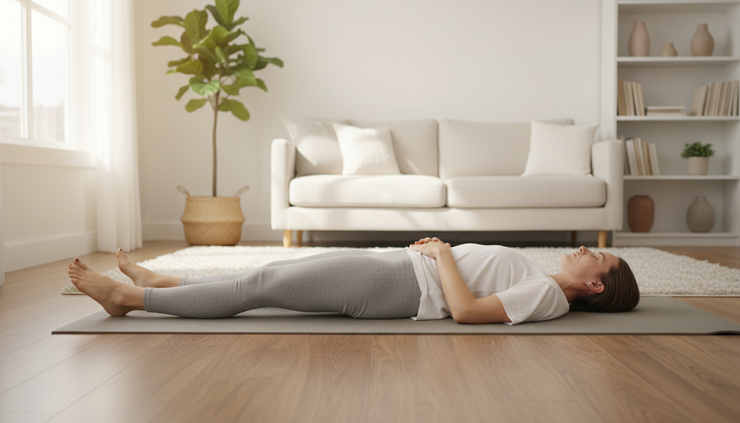
Lie on your back with knees bent and feet hip-width apart.
Keep both feet flat and avoid tucking them too close to the buttocks.
Breathe in to prepare.
Breathe out and slowly roll the pelvis back, lifting the hips a little.
Pause at a comfortable height.
Lower the spine and pelvis back down with control.
Try 6 to 10 repetitions.
Keep the knees pointing forwards. If the back of the knee feels tight, move the feet slightly farther away or lift the hips less.
Heel slides
Heel slides encourage knee movement without heavy loading. They can help maintain range of motion when bending the knee feels stiff.
How to do it:
Lie on your back with both legs bent.
Slowly slide one heel away, straightening the knee only as far as comfortable.
Slide the heel back in, stopping before the knee feels compressed.
Keep the kneecap pointing upwards.
Try 8 to 12 repetitions each side.
Use a towel or sock under the heel if the floor creates friction. The aim is easy movement, not a strong stretch.
Small knee folds
This exercise builds gentle lower abdominal and hip control. It teaches the leg to move without the pelvis rocking, which can improve walking and stair mechanics.
How to do it:
Lie on your back with knees bent and feet flat.
Keep the pelvis still and the spine relaxed.
Float one foot a few centimetres from the floor.
Place it back down slowly.
Repeat on the other side.
Try 6 to 10 repetitions each side.
Keep the knee angle comfortable. If lifting the foot increases pressure behind the knee, make the movement smaller.
Side-lying clams
Clams strengthen the gluteus medius, a hip muscle that helps control the thigh and knee. Better hip control may reduce the tendency for the knee to roll inwards during walking or stairs.
How to do it:
Lie on your side with hips stacked and knees bent.
Place a pillow between the knees if the cyst feels compressed.
Keep feet together.
Lift the top knee slightly, without rolling the pelvis back.
Lower slowly.
Try 8 to 12 repetitions each side.
The movement should be small. If you feel it mainly in the lower back, reduce the range.
Seated knee extension
This exercise gently activates the quadriceps, the muscles at the front of the thigh. Strong quadriceps help support the knee during walking, standing, and stairs.
How to do it:
Sit tall on a firm chair.
Keep both feet flat at first.
Slowly straighten one knee until the leg is comfortable.
Do not lock the knee hard.
Lower the foot with control.
Try 8 to 12 repetitions each side.
If full straightening feels tight behind the knee, stop before the tight point. The goal is controlled activation, not maximum range.
Standing calf raises
Calf strength supports walking and helps the lower leg share load with the knee.
How to do it:
Stand behind a chair or near a wall for support.
Keep weight even through both feet.
Rise onto the balls of the feet.
Pause briefly.
Lower slowly.
Try 8 to 12 repetitions.
Keep the knees soft rather than locked. If balance is difficult, use both hands for support.
Supported mini squats
Mini squats can be helpful when kept shallow. They build functional strength for sitting, standing, and stairs.
How to do it:
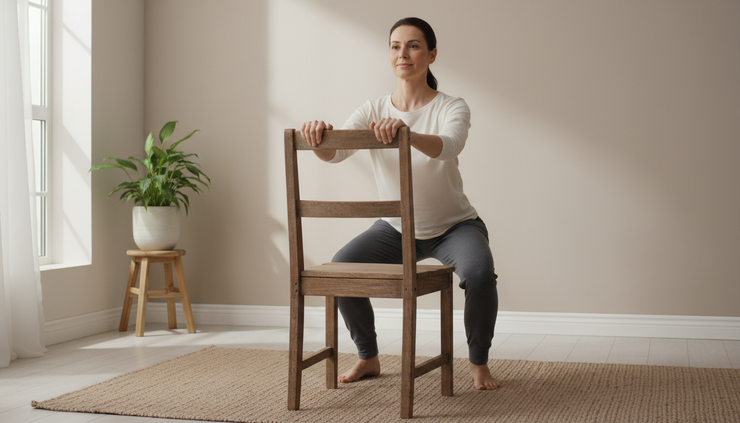
Stand facing a kitchen worktop or sturdy chair.
Place the feet hip-width apart.
Bend the knees slightly, as if starting to sit.
Keep the movement small.
Press through the feet to stand tall again.
Try 5 to 8 repetitions.
Avoid deep knee bending. Stop well before the back of the knee feels pinched or full.
A simple weekly Pilates routine
A short routine often works better than one long session. Consistency gives the knee a chance to adapt.
A gentle starting plan could look like this:
Day | Focus | Exercises |
Monday | Mobility and light strength | Heel slides, knee folds, pelvic curl |
Wednesday | Hip and thigh support | Clams, seated knee extension, calf raises |
Friday | Functional control | Pelvic curl, mini squats, heel slides |
Weekend | Easy movement | Gentle walk, light stretching, breathing work |
Keep sessions to 10 to 20 minutes at first. Add repetitions only when the knee feels settled during and after exercise.
If the knee swells more the next day, reduce the range, number of repetitions, or frequency. Progress is not measured by how hard the session feels. It is measured by better comfort, steadier movement, and less irritation over time.
Movements to modify or avoid
Pilates includes many exercises, and not all are suitable during a painful phase of a Baker’s cyst. Some positions place extra pressure at the back of the knee or demand more knee flexion than the joint currently tolerates.
Be cautious with:
Deep squats
Kneeling exercises
Sitting back on the heels
Child’s pose with knees deeply bent
Rolling like a ball
Full teaser variations if they strain the knees
High-resistance leg work
Fast transitions from floor to standing
Any exercise that causes sharp pain or swelling
This does not mean these movements are banned forever. They may return later with support from a physiotherapist or qualified Pilates teacher. During a flare-up, simpler is better.
How Pilates fits with NHS-style self-care
NHS guidance for Baker’s cysts commonly focuses on easing symptoms and treating the cause. This may include rest when symptoms flare, ice, elevation, pain relief if suitable, and assessment for knee conditions such as arthritis or cartilage injury.
Pilates can sit alongside that approach when symptoms allow. It is a form of controlled exercise, not a replacement for medical care. If inflammation inside the knee is driving the cyst, the broader plan may also include physiotherapy, weight management where relevant, medication, or further investigation.
Research on exercise for knee osteoarthritis supports strengthening and movement as part of long-term management. Pilates studies in people with knee osteoarthritis suggest benefits for pain and function, but the quality and size of studies vary. The safest claim is this: Pilates may help improve the strength, mobility, and movement control that support a painful knee, especially when exercises are adapted and progressed gradually.
How to know if Pilates is helping
Look for small, practical changes rather than dramatic overnight shifts.
Good signs include:
Less stiffness after sitting
Easier walking on flat ground
More confidence climbing stairs
Less guarding around the knee
Better control during sit-to-stand movements
No increase in swelling after exercise
Symptoms settling within 24 hours after a session
Warning signs include:
Increasing swelling behind the knee
New calf pain or swelling
Sharp catching or locking in the knee
Pain that changes your walking pattern
Symptoms that worsen after each session
If warning signs appear, pause the routine and seek professional advice.
A supportive way forward
A Baker’s cyst can feel worrying, but it is often manageable once the underlying knee irritation is understood. Pilates offers a calm, structured way to keep moving without pushing the knee too hard.
Start with comfortable exercises, keep the range small, and build slowly. Focus on the hips, thighs, calves, and movement control around the whole leg. When combined with NHS-style self-care and guidance from a health professional where needed, Pilates can be a useful part of easing discomfort and improving day-to-day mobility.
The best next step is simple: choose three gentle exercises, practise them on a settled day, and notice how the knee responds over the next 24 hours. Let that response guide what comes next.


Comments